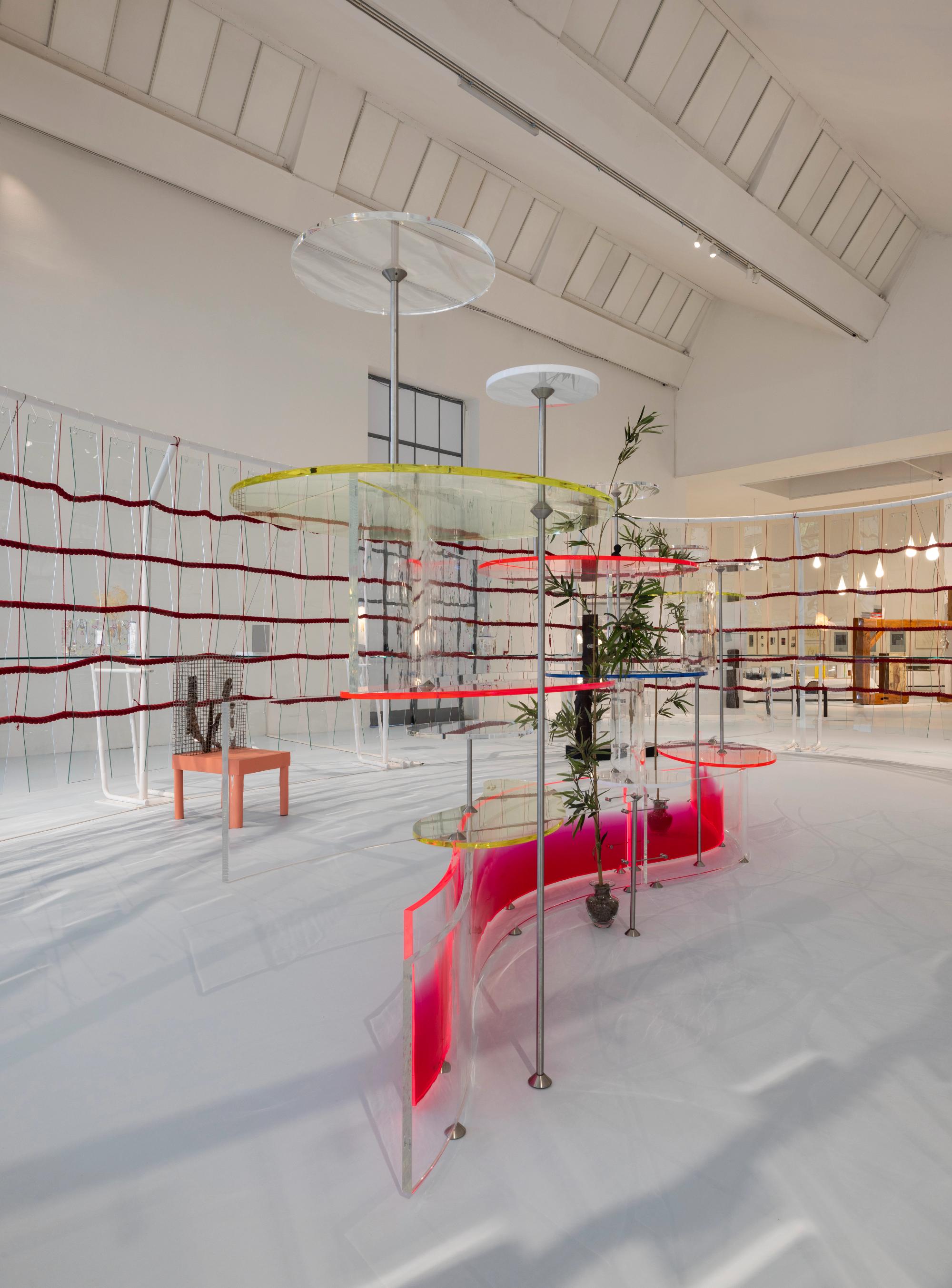
Installation view of Andrea Branzi By Toyo Ito. Continuous Present at the Triennale Milano. Photo by Andrea Rossetti © Triennale Milano.
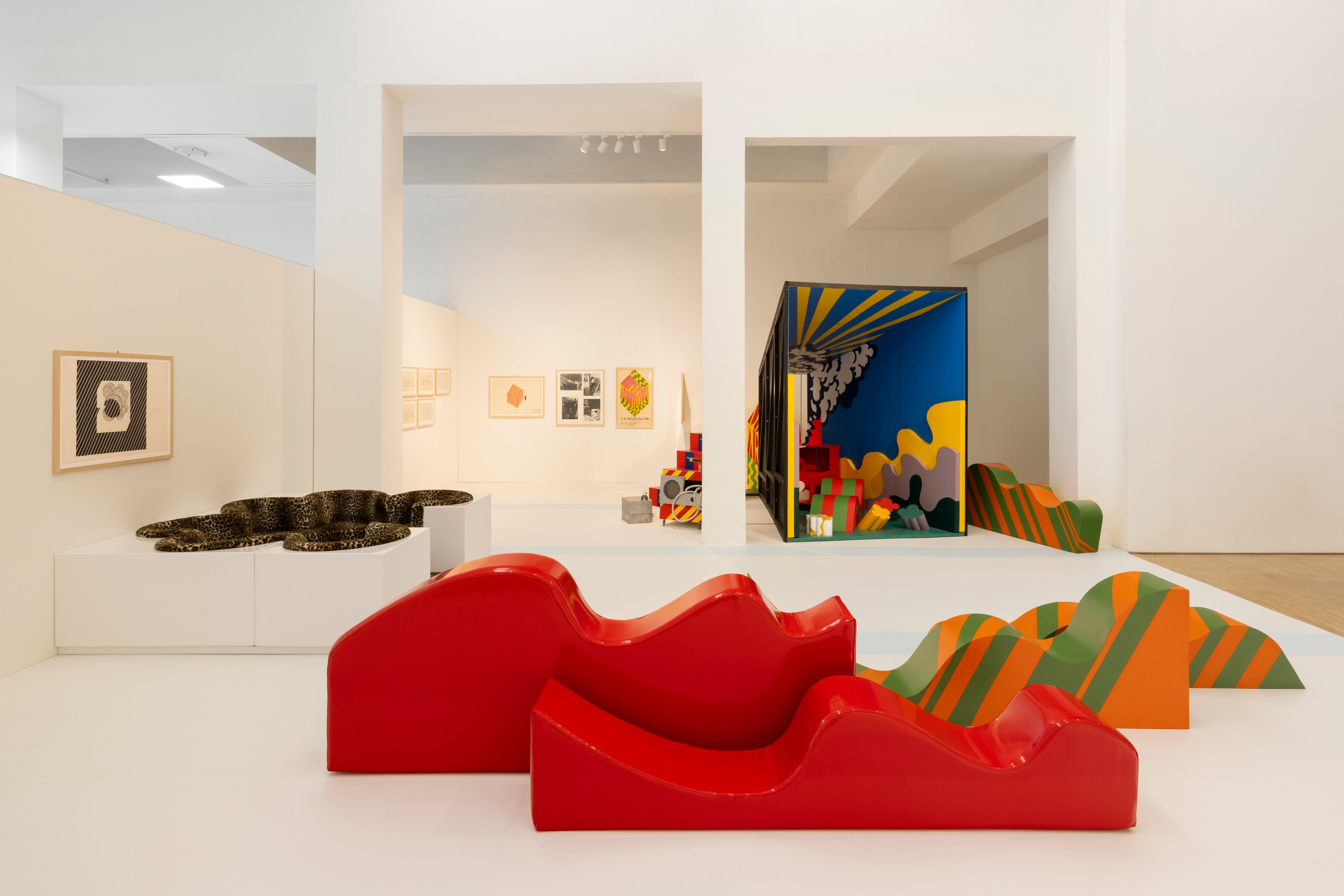
Installation view of Andrea Branzi By Toyo Ito. Continuous Present at the Triennale Milano. Photo by Andrea Rossetti © Triennale Milano.
How do you solve a problem like Andrea Branzi? This was the question facing Triennale Milano and Fondation Cartier pour l’art contemporain when preparing Andrea Branzi by Toyo Ito. Continuous Present, a major exhibition at Milan’s Palazzo dell’Arte, curated by Nina Bassoli (Triennale Milano) and Michela Alessandrini (Fondation Cartier pour l’art contemporain). Both institutions have maintained a close bond with this iconic architect, designer, professor, curator, and artist with numerous collaborations. Born and educated in Florence, the maverick Branzi (1938–2003) is best-remembered for No-Stop City (1969), a theoretical proposition he developed with Archizoom Associati, the radical Italian architecture group. Founded by Branzi, Gilberto Corretti, Paolo Deganello, and Massimo Morozzi, Archizoom burst onto the scene with Superarchitettura, an ironic demonstration of anti-design they organized with fellow radicals Superstudio in 1966. Branzi’s later practice, which he moved to Milan in 1973, covered everything from theory and writing to furniture, objects, and museum and landscape design, as well as teaching and exhibitions. If he poses a “problem” for curators, it’s not just because his rich and prolific career spanned six long decades, but because he eschewed easily digestible projects in favor of a philosophical enquiry into the nature of space, time, and existence. As its title suggests, the exhibition was designed by Japanese architect Toyo Ito, who was close to Branzi for almost three decades, and who memorably collaborated with him on a 2004 competition proposal for a concert hall in Ghent.
Developed in collaboration with the teams at Triennale Milano and Fondation Cartier pour l’art contemporain, PIN–UP’s special publication on Continuous Present will be released during Milan Design Week 2026. Below is an interview from the book between Andrew Ayers and curators Michela Alessandrini and Nina Bassoli, who discuss translating Andrea Branzi’s six-decade, radical practice — one that set out to dematerialize architecture — into an exhibition, and making its ideas legible to a wider audience.
Installation view of Andrea Branzi By Toyo Ito. Continuous Present at the Triennale Milano. Photo by Andrea Rossetti © Triennale Milano.
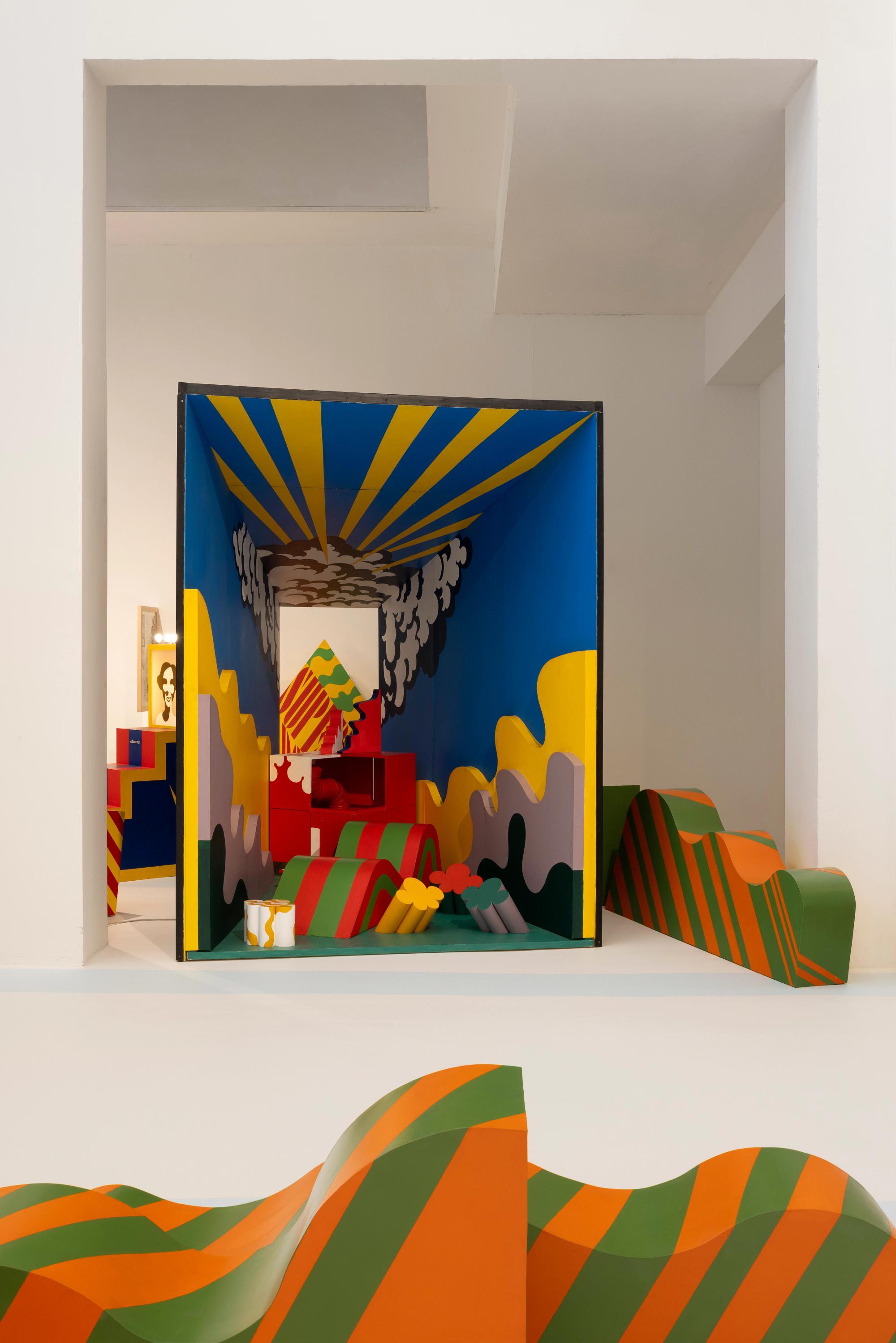
Installation view of Andrea Branzi By Toyo Ito. Continuous Present at the Triennale Milano. Photo by Andrea Rossetti © Triennale Milano.
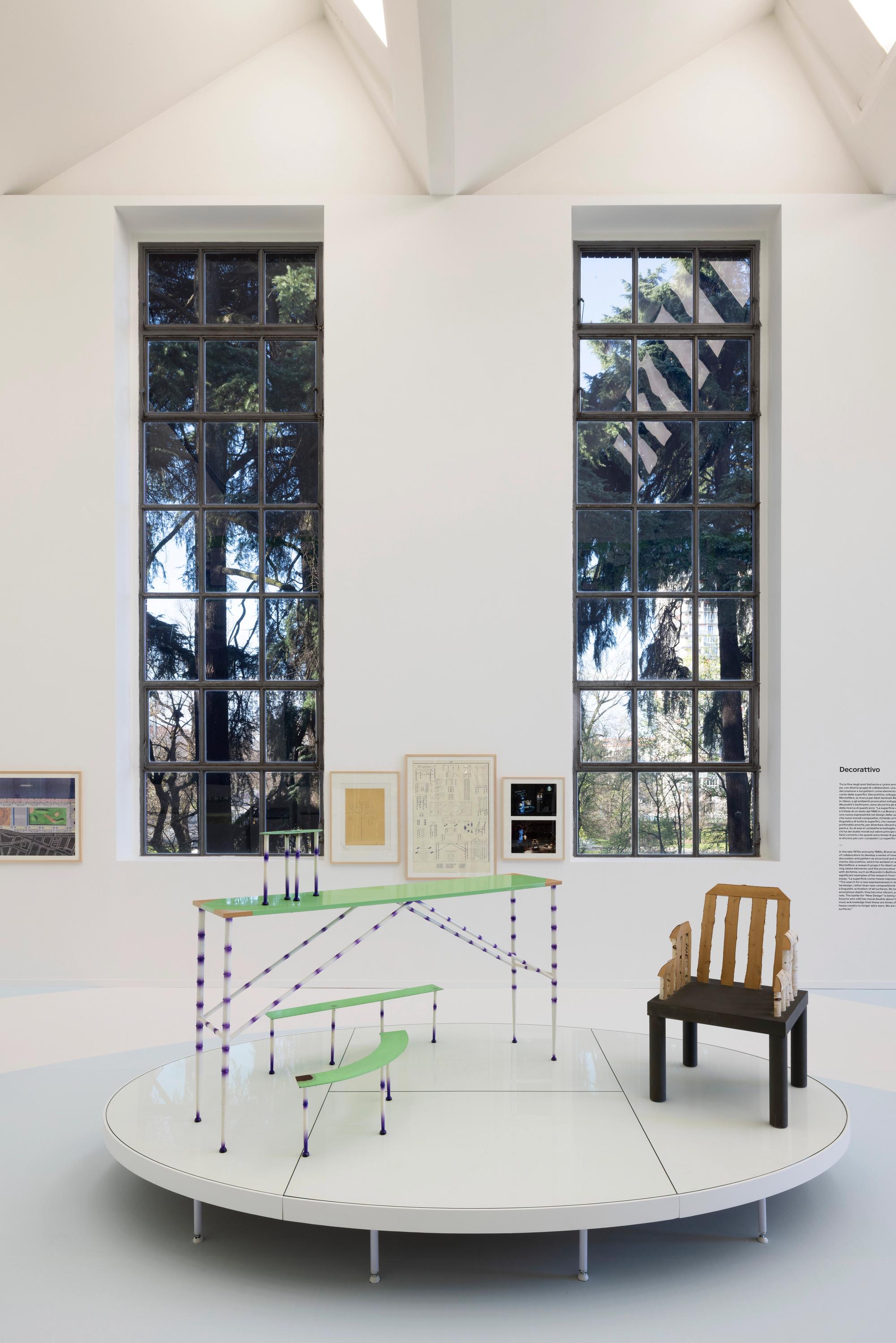
Installation view of Andrea Branzi By Toyo Ito. Continuous Present at the Triennale Milano. Photo by Andrea Rossetti © Triennale Milano.
Andrew Ayers: How did you go about digesting Andrea Branzi’s six-decade-long highly theoretical body of work to make it palatable to a non-specialist public?
Nina Bassoli: For that, the collaboration with Michela was essential. I’m an architecture curator, while Michela is an art curator. On my side, I pushed myself to consider Branzi’s projects as artworks, not so much to explain them but to try to capture feelings, emotions, and perception. In architecture and design, Branzi sought to touch the deepest reaches of the soul and to question the meaning of life.
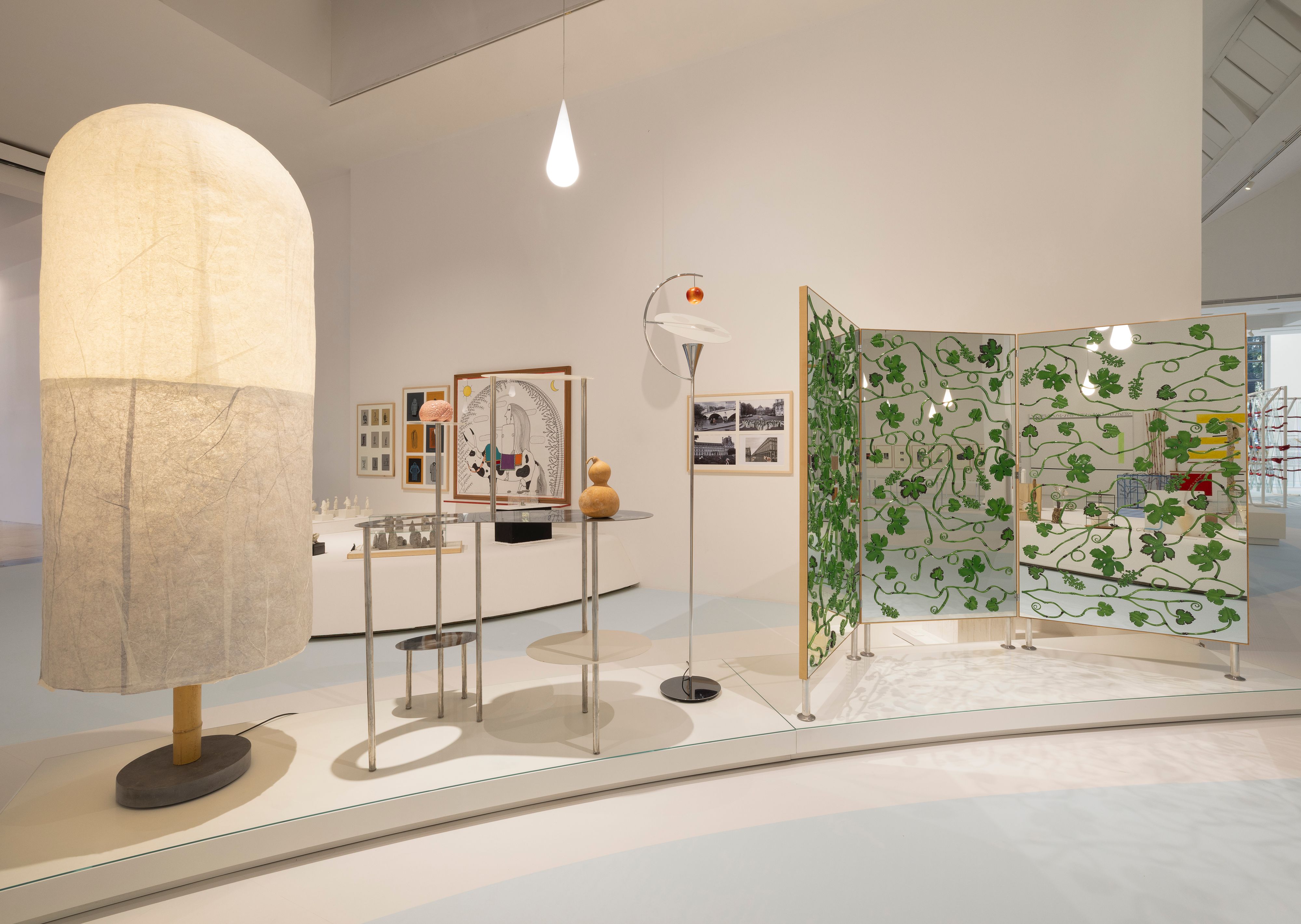
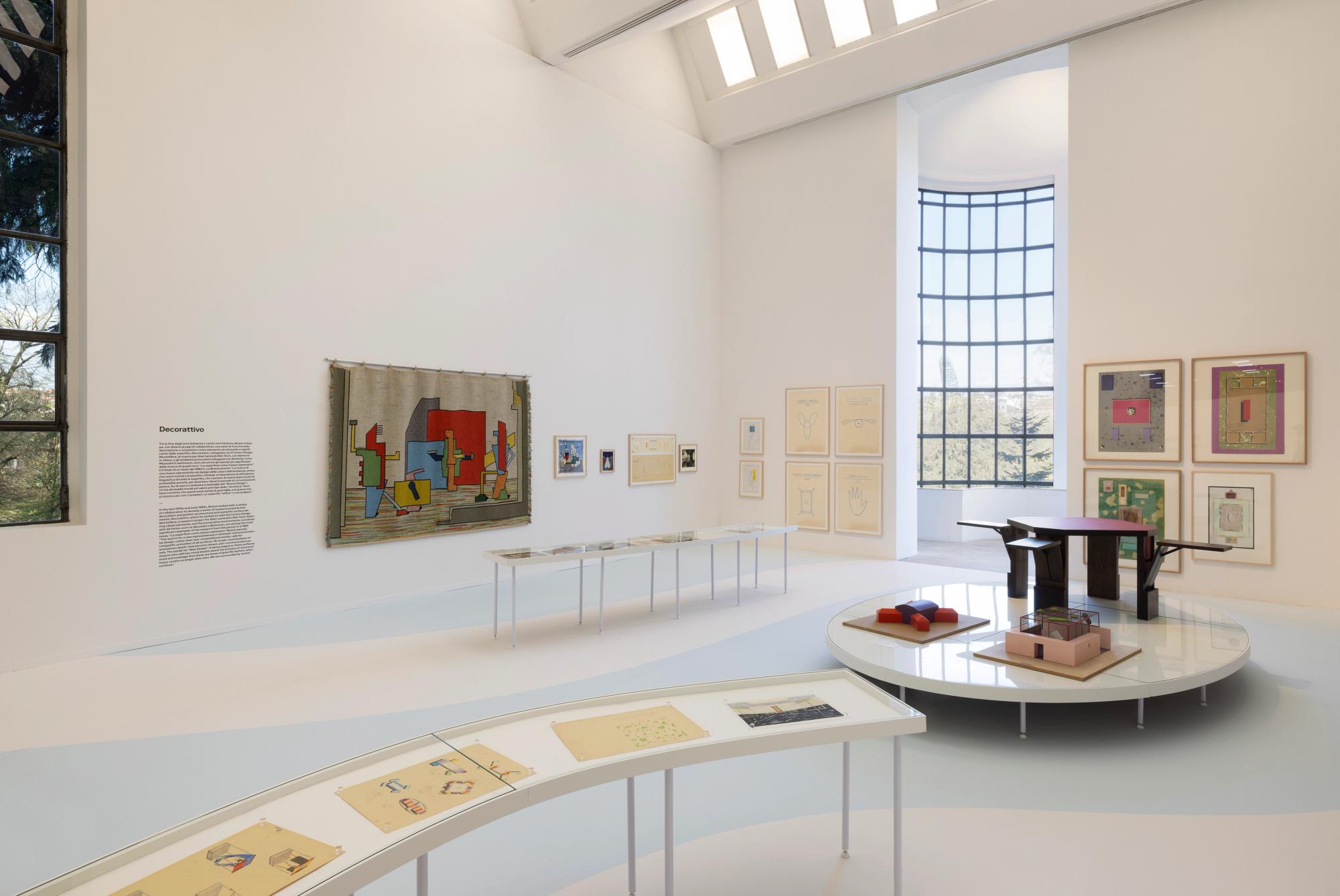
Michela Alessandrini: Branzi sought to deconstruct and dematerialize architecture, so a lot of the archival material is models and projects, but not the sort you’d typically find. Challenging the canon and defying dogmas was the essence of radical architecture, and was something he did all his life. That approach is reflected in Toyo Ito’s exhibition design, which is based in flows and fluxes, with no single path and almost no walls. Fluxes are marked out on the floor in either white or blue — they could be flows of air, water, or information — and, while they convey you through the exhibition, you’re quite free. In his museum and gallery projects, Branzi sought to liberate social behavior. As curators, we highlighted key points and ideas and distributed them freely in the space.
NB: A fascinating aspect of Branzi’s approach to architecture is landscape design, where he tried to avoid constructing buildings and instead create idea-filled environments that would reconstruct behavior. He imagined “writing” landscape by drawing onto the ground and onto surfaces. He envisaged a space where we can all work, play, and be together. In this reading, architecture is not walls, forms, or objects, but rather an environment. The exhibition tries to reproduce this. Rather than explaining, it first of all wants you to perceive. Of course there are texts and presentations that allow visitors to engage intellectually, but the most important idea is being in this landscape of feelings and sensations.
Installation view of Andrea Branzi By Toyo Ito. Continuous Present at the Triennale Milano. Photo by Andrea Rossetti © Triennale Milano.
How did you tackle the idea of “continuous present”?
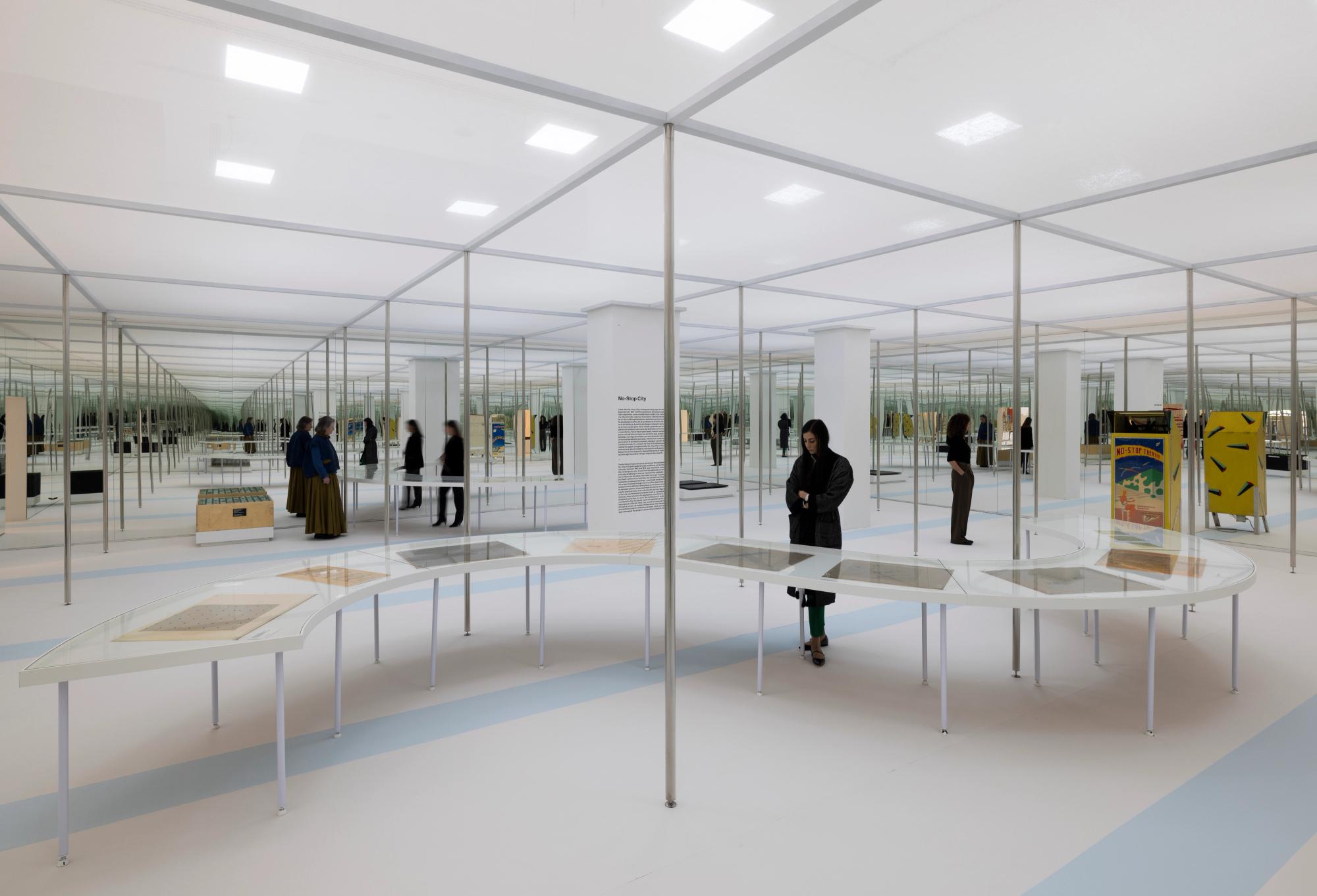
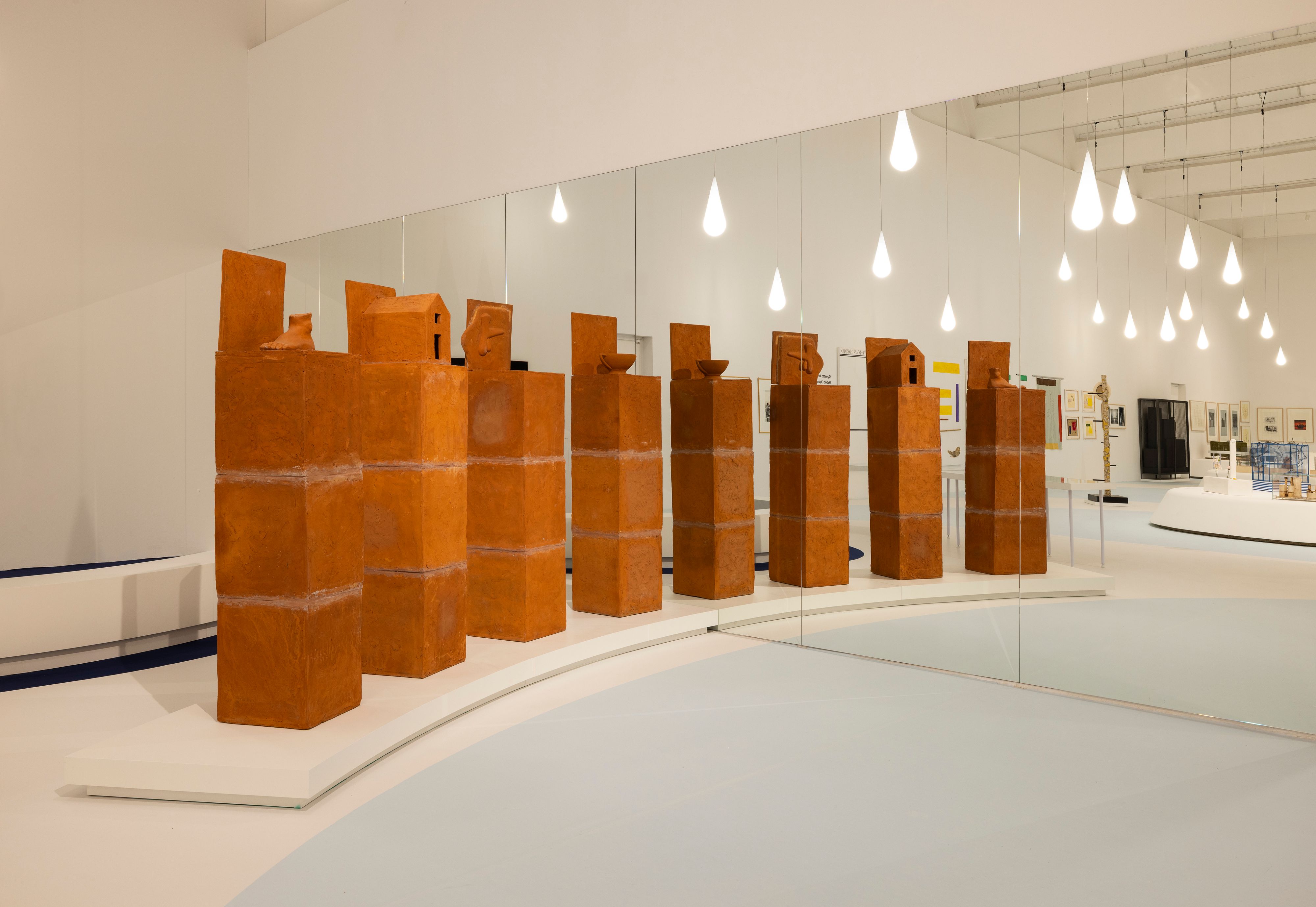
MA: The show opens with Branzi’s self-portrait from 1968 and ends with another he did in 2022, the year before he died. As you reach the end, there’s a huge mirror to indicate that actually there’s no beginning or end to the show, it’s open to the infinite, like his architecture and projects. The use of mirrors is very important in the exhibition. For Branzi, the “continuous present” is the meeting point of different temporalities, spaces, and people.
NB: For No-Stop City, which is perhaps Branzi’s most important seminal project, Toyo Ito has made a 1:1 immersive installation where visitors can experience the idea of the infinite territory. It’s a room with mirrors all the way round, so you find yourself in what you perceive as an infinite space, with a grid, which was the basis of No-Stop City, with an artificial landscape that, in its infinity, mirrors nature. This is one of the key concepts in Branzi’s thinking. As with the original project, the space is characterized by what you do in it. So if you’re dressed in red, the city will become red. Before No-Stop City, visitors encounter a recreation of the Superarchitettura exhibition, the “Pop period” in Branzi’s career, featuring brightly colored visual expressions of counterculture ideas. Here you’ll see some of the best-known and most iconic pieces, like the Superonda and Safari sofas, ironic parodies that take aspects of nature — ocean waves, animal skins — to make something very artificial. The whole point for Branzi was that the world is both natural and artificial all at once.
Such ideas would later translate into his Animali Domestici furniture pieces.
NB: Absolutely. Those pieces are a form of conceptual art. Although he trained as an architect, I think Branzi was an artist in the deepest part of himself. He also wanted to demonstrate that artworks can have use value — you can sit on them, keep books on them, eat off them, because they’re part of your life. They’re your friends, like pets you live with.
MA: Take his 2010 shelving unit Tree 5. It’s a hybrid interaction between an industrial metal surface and an organic growth, where you have a tree rising up in the middle of the shelves, an encounter between the horizontal and the vertical. When you look at the concept models, you see an iterative process of abstraction, which for me is very Mondrian. In his early works, Mondrian painted rows of trees, which progressively became at once more absent and present. Branzi’s way of working is similar. He was the designer of the invisible, of spirituality, of errors, of passions, of everything subjacent. For him, this is what it means to be human, which is why he sought to create objects for daily life. How can design interact with what you do? Tree 5 can become a mini exhibition space in the home — you decide what to display in it. Branzi was an animist, a firm believer in the power of objects. So living and non-living creatures could all cohabit in the home. Living with this shelf brought meaning to everyday existence.
Installation view of Andrea Branzi By Toyo Ito. Continuous Present at the Triennale Milano. Photo by Andrea Rossetti © Triennale Milano.
Installation view of Andrea Branzi By Toyo Ito. Continuous Present at the Triennale Milano. Photo by Andrea Rossetti © Triennale Milano.
How did such thinking translate to a larger scale?
NB: Branzi influenced generations of students with the idea that architecture is not about walls or objects but about the relationship between humans and other things and beings. This is really contemporary. In the 1960s and 70s, his work foresaw the megalopolises we see emerging now, with AI and all the devices that organize our lives. He approached this phenomenon not so much from its physical aspects as from the processes underlying it, which is something we saw happening with the creation of the Internet. His thinking was very prophetical in that sense, and it’s interesting to note that he wasn’t in the least scared of the future. He saw the virtual world as architecture and space — rather than bricks and walls, architecture is us, our objects, devices, and relationships. In terms of physical space, he had this idea that architecture was no longer skyscrapers but a horizontal surface. It’s a very philosophical idea of soft power where, rather than a rigid, top-down approach, you effect a level redistribution of relationships in a more varied, flexible, and democratic way.
MA: Operating in the late 60s and early 70s really shaped Branzi’s approach towards critique and building another world he firmly believed in. Take Animal City, a series of collages that originated in 2008 when he and Stefano Boeri responded to a call for projects for the greater-Paris area. His idea was to fill Paris with cows and monkeys to disrupt the supposed functionality of our cities and create an element of surprise. This radical questioning of everything was really embedded in his practice. That’s his legacy. He conceptualized it as being “weak and widespread,” like water slowly seeping through the terrain to create something really powerful. It stands in opposition to that which is easily defined, classifiable, rigid, and apt to become canonic. This was an issue right from the beginning. Paolo Deganello wrote a letter to Branzi about how to proceed with Archizoom at a crucial moment in its trajectory. “What do we do with our theories?” he asked. “Do we apply them to reality” — which meant getting mixed up in the messy reality of politics — “or do we keep them as a theoretical concept?” Branzi was definitely more interested in ideas, but that doesn’t mean they were less political or impactful than a built project. His teaching, writing, lecturing, and exhibitions saw to that.
NB: A lot of his collaborators have commented on the fact that he didn’t really want to realize projects. When doing competitions, his first question was always, “Okay guys, what’s the goal? Do you want to design a good project or do you want to win the competition?” For him, you went all the way with an idea, however unfeasible it seemed, because that’s how you might discover something truly fundamental.
Installation view of Andrea Branzi By Toyo Ito. Continuous Present at the Triennale Milano. Photo by Andrea Rossetti © Triennale Milano.
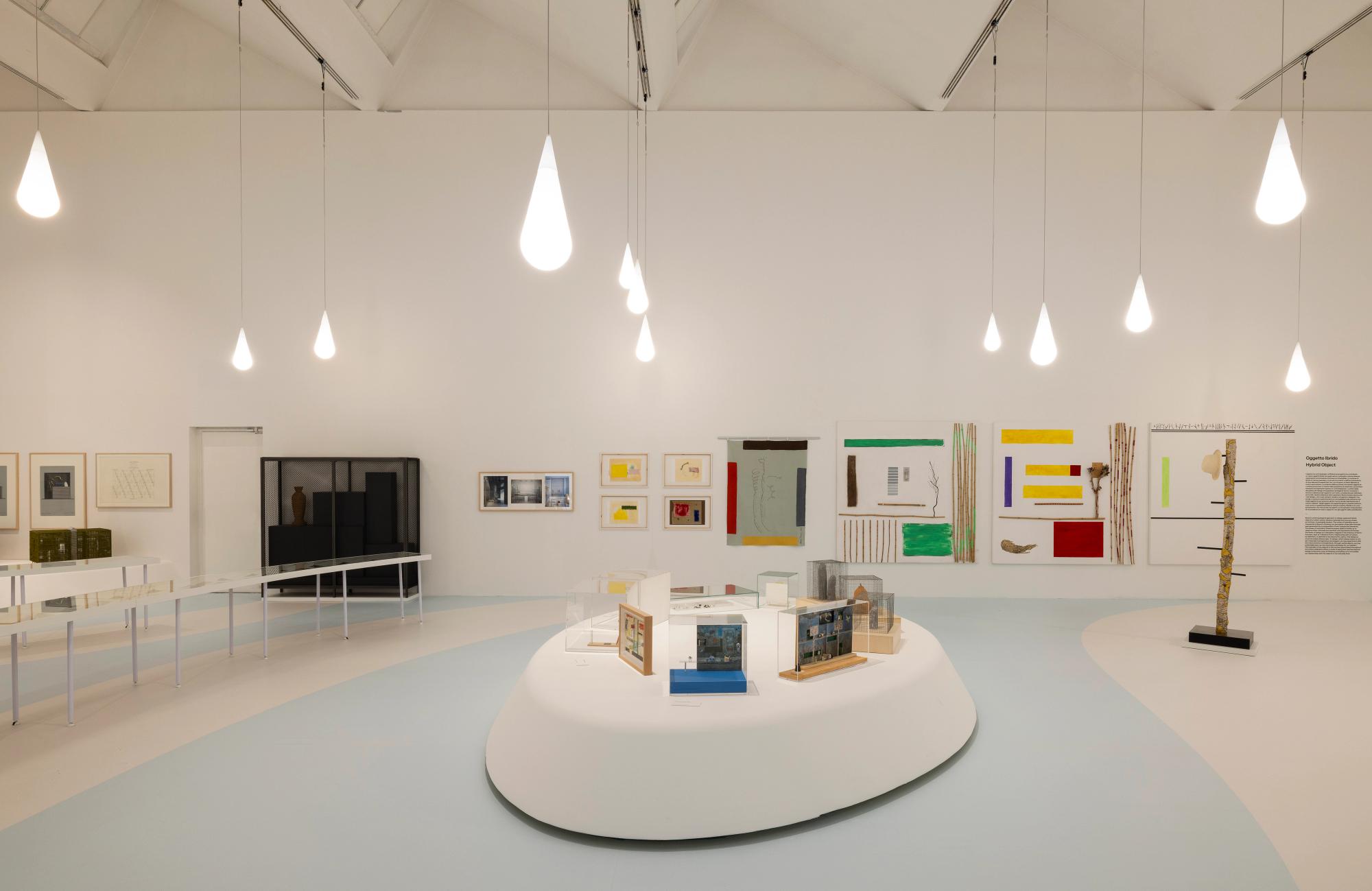
Installation view of Andrea Branzi By Toyo Ito. Continuous Present at the Triennale Milano. Photo by Andrea Rossetti © Triennale Milano.
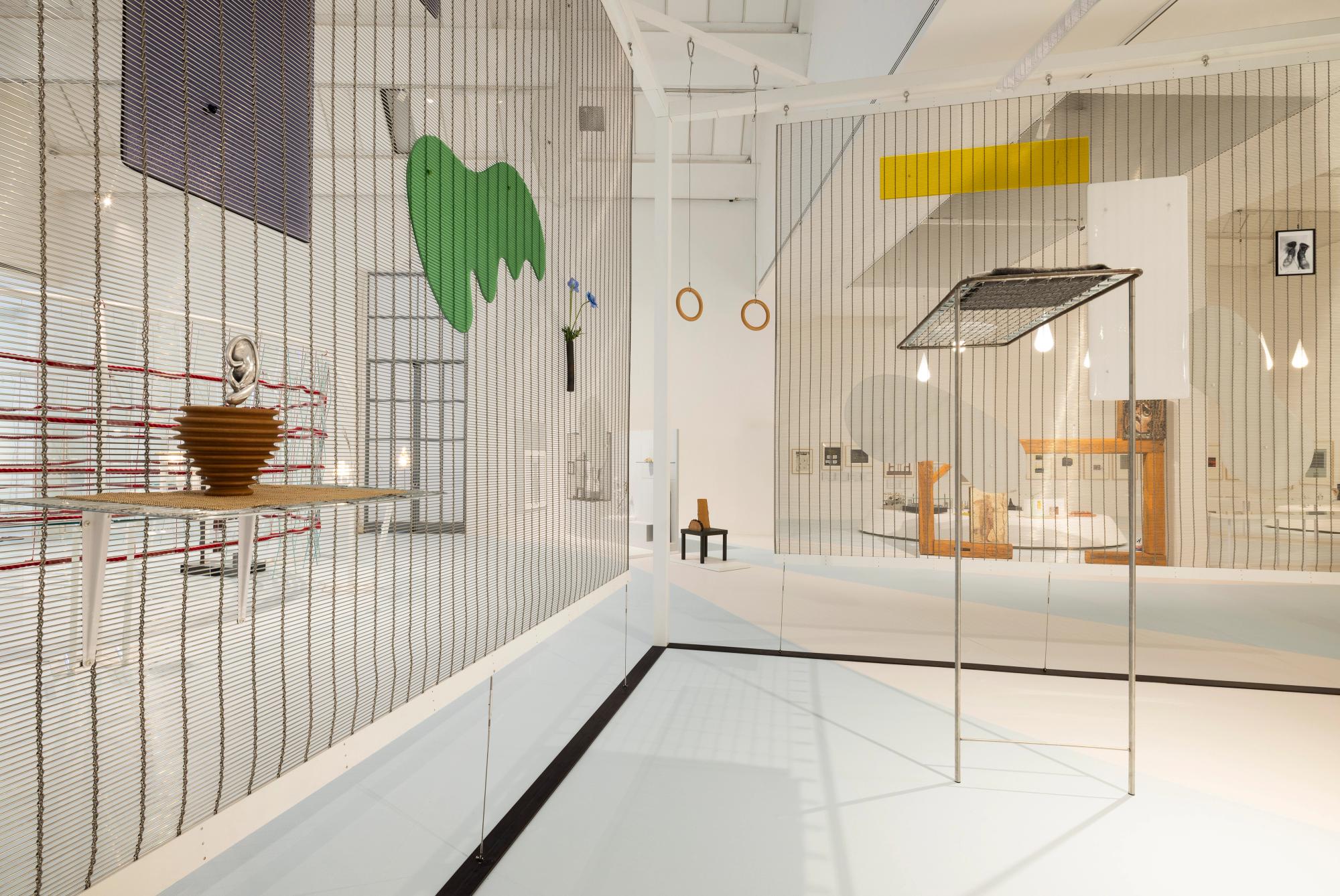
Installation view of Andrea Branzi By Toyo Ito. Continuous Present at the Triennale Milano. Photo by Andrea Rossetti © Triennale Milano.